

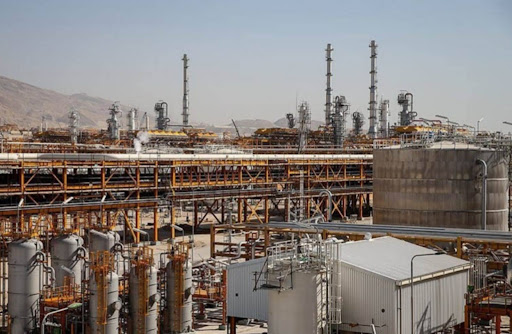
Iran drew a new and dangerous battle line on Wednesday, threatening Gulf energy infrastructure on a sweeping scale after Israeli forces struck the South Pars gasfield in the opening of what Tehran called a full-scale economic war. The Revolutionary Guards named specific facilities across Saudi Arabia, the UAE, and Qatar as imminent targets and issued evacuation orders. Oil prices rose sharply in response, approaching levels last seen in mid-2022.
South Pars, the world’s largest natural gas reserve, has been the linchpin of Iran’s gas economy for decades. The Israeli strike — carried out, according to reports, with US approval — was the first direct attack on Iranian fossil fuel production since the conflict began. It ended a months-long restraint that had been deliberately maintained by both sides to contain the war’s impact on global energy markets.
Iran’s state media identified the Samref refinery and Jubail complex in Saudi Arabia, the UAE’s al-Hosn gasfield, and Qatar’s Mesaieed and Ras Laffan facilities as targets. “All citizens, residents, and employees are requested to immediately leave these areas,” the state broadcaster announced. The governor of Asaluyeh province, where South Pars is located, said Iran was now engaged in a total economic war and that the US-Israeli escalation had been a historic mistake.
Brent crude climbed nearly 5% to $108.60 per barrel Wednesday afternoon, while European gas benchmarks surged more than 7.5%. The broader energy picture was deeply troubled even before the South Pars strike: Gulf oil exports had fallen 60% from pre-war levels, the Strait of Hormuz remained effectively blockaded by Iran, and oil facilities in Iraq and the UAE had already been hit. The threat of further strikes could deepen what was already a severe global supply disruption.
Qatar’s government spokesperson Majid al-Ansari warned that attacking energy infrastructure was a direct threat to global energy security, regional populations, and the environment. With oil prices rising and Iran’s retaliatory clock running, the world’s energy markets were in a state of acute anxiety. The events of the coming hours would determine whether the conflict’s energy dimension could be contained or whether it was about to spiral further out of control.
