
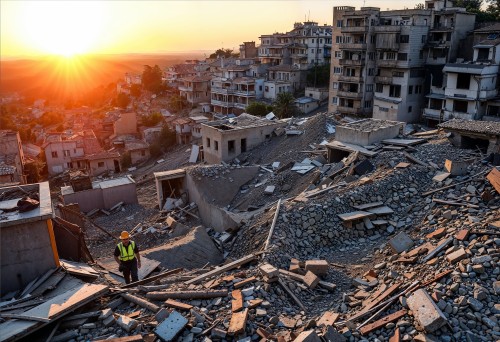
A devastating 7.8-magnitude earthquake hit off the southern coast of the Philippines on Monday, resulting in the deaths of at least 35 individuals and injuring over 200 more. This powerful offshore quake, with its epicenter near Mindanao at a depth of 33 kilometers, also triggered a tsunami impacting various coastal areas. The city of General Santos experienced significant destruction, with numerous buildings either collapsing or incurring severe structural damage. Search and rescue teams are actively working to find people who may be trapped under the rubble.
One of the most tragic incidents took place in Sarangani province, where a landslide caused by the tremor claimed the lives of 13 residents. Additional fatalities were reported in neighboring areas due to falling debris and collapsing structures. The tsunami generated waves reaching up to 1.4 meters, which inflicted damage on homes and coastal infrastructure along the southern coastline. Smaller tsunami waves were detected in nearby regions, including Indonesia, Palau, and Japan. Authorities have since lifted tsunami warnings after assessing that the immediate danger had subsided.
The earthquake led to the temporary closure of General Santos International Airport, causing the cancellation of numerous domestic flights. In response to the disaster, schools in the affected regions were closed as emergency personnel evaluated the extent of the damage and organized relief efforts. President Ferdinand Marcos Jr. has called for a swift government response, instructing disaster management agencies to provide assistance to impacted communities.
Officials have cautioned residents to remain vigilant due to the potential for aftershocks and advised against returning to damaged buildings until thorough safety inspections have been conducted. The Philippines, situated along the Pacific Ring of Fire, is renowned for its susceptibility to frequent seismic and volcanic events, heightening the urgency of precautionary measures in the aftermath of such natural disasters.