
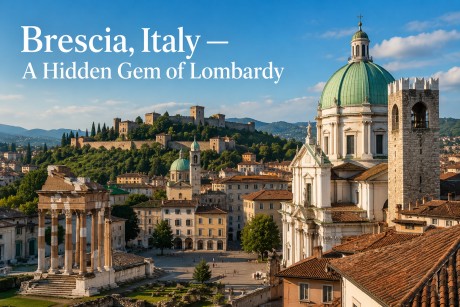
Nestled in the Lombardy region of northern Italy, Brescia stands as a hidden gem offering a vibrant tapestry of history, culture, and gastronomy without the bustling tourist crowds of more renowned Italian cities. While many travelers often bypass Brescia in favor of destinations like Milan, Verona, or Lake Garda, those who venture into this city are rewarded with an enchanting mix of historic neighborhoods, dynamic cafes, majestic churches, and significant Roman relics.
The heart of Brescia is embodied in the Carmine district, known for its lively streets, charming cafes, and restaurants that capture the essence of local life. A visit to the historic Piazza della Loggia unveils not only its architectural elegance and iconic clock tower but also a poignant chapter in Italian history, as it was the site of a tragic bombing in 1974 that claimed eight lives. This square, along with other areas of Brescia, reflects the city’s journey through the political shifts of the 20th century.
Art and architecture enthusiasts will find Brescia a treasure trove of attractions. The Teatro Grande, a revered historic theater, and the Church of San Cristo, adorned with exquisite interiors and murals, highlight the city’s artistic heritage. Its Roman roots are showcased in the Brixia archaeological area, which houses the remnants of an ancient temple complex, complemented by the Santa Giulia Museum’s extensive collection of historical artifacts.
Gastronomy is another compelling reason to explore Brescia. The city’s culinary offerings include traditional dishes like casoncelli, a stuffed pasta served with butter and sage, and malfatti, a unique type of gnocchi. Additionally, the nearby Franciacorta wine region, south of Lake Iseo, is celebrated for its exceptional sparkling wines, making it a must-visit for wine aficionados.
Just a short distance from Brescia lies Lake Iseo and the picturesque Monte Isola, inviting travelers to enjoy scenic mountain views, traditional fishing communities, and local craftsmanship. The peaceful atmosphere of the lakeside villages, coupled with the opportunity to delve into traditional boatbuilding, offers a serene escape from the more frequented tourist spots in Italy. Brescia seamlessly combines Roman history, Italian cuisine, artistic heritage, and the charm of local traditions, making it an attractive destination for those seeking an authentic and less crowded Italian experience.