
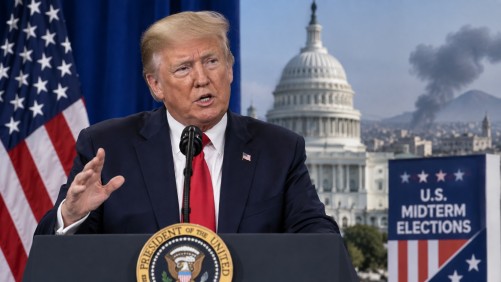
In the midst of ongoing tensions between the United States and Iran, President Donald Trump has expressed optimism that the conflict could conclude following the US midterm elections in November. During a conversation with reporters in Dublin, Trump suggested that Iran might be attempting to extend the conflict to sway the elections but hinted that hostilities could cease soon afterward. He also predicted a significant drop in oil prices once the conflict ends.
Iranian President Masoud Pezeshkian, attending the BRICS Summit in New Delhi, reiterated Iran’s preference for peace over prolonged hostilities. Pezeshkian emphasized that Iran does not seek war and underscored the importance of regional countries ensuring their security, rather than relying on US intervention. His comments reflect Iran’s stance that regional security should be managed locally.
The conflict has had a notable impact on global energy markets, particularly affecting oil prices. Tensions in strategic locations such as the Strait of Hormuz have led to a marked increase in crude prices, which have recently surpassed $100 per barrel. This surge underscores the significant economic ramifications tied to the conflict’s progression.
Efforts to broker a settlement have so far been unsuccessful in achieving lasting peace, with clashes continuing at a reduced intensity. The persistent uncertainty surrounding the conflict raises concerns about the stability of regional security and the reliability of global energy supplies. Observers are keenly aware of the potential implications for the future, especially with the midterm elections approaching.