
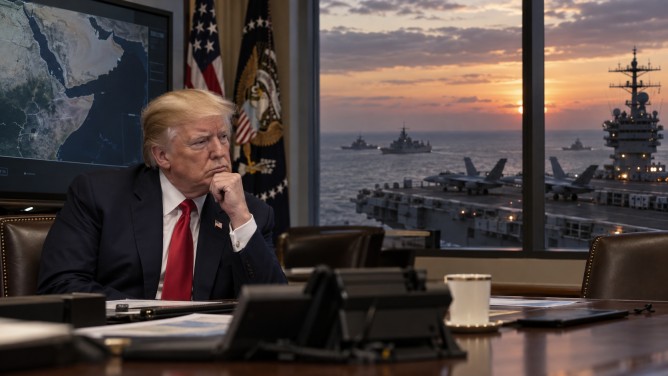
The decision to delay military strikes against Houthi targets in Yemen has kept U.S. forces at the ready but not yet in action, highlighting the complexities and potential ramifications of such an intervention. This hesitation reflects broader concerns about further straining American military resources, already heavily engaged in the wider conflict involving Iran.
President Donald Trump has opted to postpone any immediate military action, despite earlier instructions to the Pentagon to prepare for airstrikes. This came after discussions with Saudi Crown Prince Mohammed bin Salman, who has been advocating for U.S. intervention against the Houthi fighters, who have increased their attacks on Saudi interests. However, by Sunday, the administration had chosen to pause, leaving military plans in a state of readiness but not deployment.
This delay comes amidst ongoing tensions in the region, where the conflict between the Iran-backed Houthis and Yemen’s internationally recognized government, supported by Saudi Arabia, has escalated once again. The hostilities have reignited concerns over regional security, notably around the strategic Red Sea and Bab al-Mandab Strait, critical for global energy supplies.
Within the U.S., there are significant reservations regarding the effectiveness of airstrikes alone in altering the Houthis’ strategies. Past military operations in the region have not yielded long-term solutions, leading some officials and experts to question the viability of escalating military actions without a comprehensive strategy.
The situation underscores the delicate balance the U.S. must maintain between supporting its allies and managing its own military commitments across the Middle East. As the situation develops, the potential for further military involvement remains a contentious issue, with implications for both regional stability and U.S. foreign policy.