
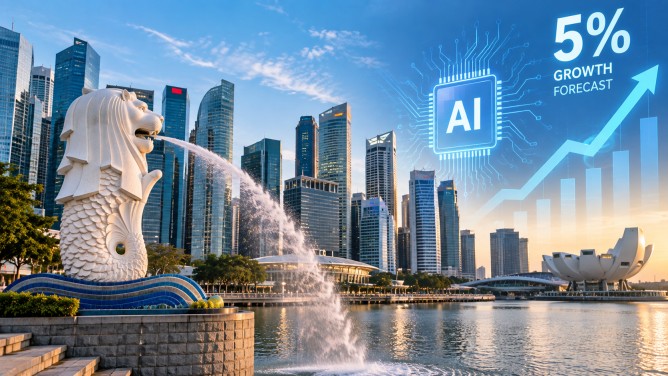
Singapore’s economy is on track to achieve a growth rate of 5% in 2026, according to recent projections, marking an upward revision from the earlier forecast of 3.5%. This optimistic outlook is largely attributed to the ongoing robust demand for artificial intelligence (AI), which continues to bolster the technology sector. The Monetary Authority of Singapore (MAS) conducted a survey involving 21 economists and analysts, revealing that the most probable growth range for that year lies between 5% and 5.4%.
In the second quarter of the year, Singapore’s economy demonstrated remarkable expansion, growing by 5.9% compared to the previous year. This performance significantly surpassed the earlier median forecast of 4.3%. Respondents in the survey unanimously pointed to the sustained upturn in AI-driven technology as a central pillar supporting the nation’s economic prospects. Additionally, the resolution or de-escalation of the West Asia conflict, along with stronger-than-expected global growth, were identified as potential factors that could further enhance economic performance.
Despite the positive outlook, experts also flagged certain risks that could impact Singapore’s economic trajectory. A prolonged conflict in West Asia and the possibility of a burst in the AI investment bubble were highlighted as significant downside risks. These factors could potentially dampen the optimistic growth forecast if they were to materialize.
Looking further ahead, economists anticipate a GDP growth rate of 3.1% for Singapore in 2027. Meanwhile, inflation for 2026 is projected to be at 2.1%, with MAS core inflation expected to reach 1.9%. The unemployment rate by the end of the year is forecasted to remain stable at 2.1%, suggesting a steady labor market amidst these economic developments.