
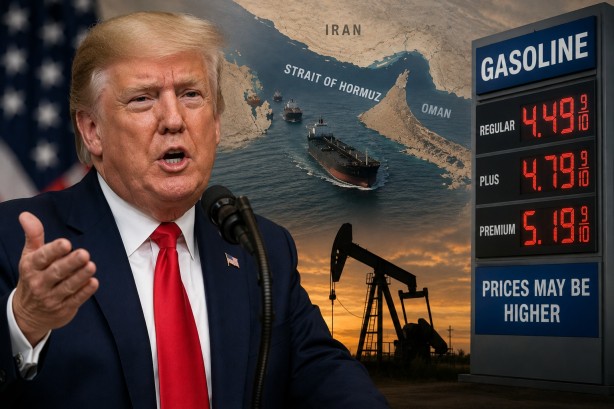
In the midst of ongoing tensions with Iran, U.S. President Donald Trump has called on Americans to accept the prospect of slightly higher gasoline prices as a necessary trade-off for ensuring that Iran does not acquire nuclear weapons. During a rally held in New York, Trump acknowledged the potential impact on fuel costs, stating that paying “a tiny little bit more” for gasoline is a small sacrifice to make in the larger scheme of international security. He also floated the idea of potentially declaring the critical Strait of Hormuz, a vital shipping lane, as “a territory of the United States” following a hypothetical victory over Iran.
In response to President Trump’s remarks, Iran has firmly rejected the notion of relinquishing control over the Strait of Hormuz. Deputy Foreign Minister Kazem Gharibabadi reiterated Iran’s stance, emphasizing that the country would continue to enforce its blockade of the waterway until the U.S. acknowledges what he termed as its defeat. Meanwhile, Iranian Foreign Minister Abbas Araghchi confirmed that Tehran has yet to decide on resuming negotiations with the United States, adding that the resumption of shipping through the strait is contingent on Washington meeting Iran’s conditions.
The standoff has notably affected tanker traffic through the Strait of Hormuz, a key conduit for global oil and natural gas exports. This disruption has contributed to an increase in crude oil prices and added pressure on global fuel costs. In the United States, the average gasoline price has climbed to approximately $4.08 per gallon, marking a 29% increase from the previous year. Concurrently, Brent crude prices are on course for a significant rise over the week, reflecting the broader economic impact of the impasse.
The economic repercussions are also being felt within Iran. Iranian President Masoud Pezeshkian has attributed the country’s rising inflation to the U.S. blockade, sanctions, and constraints on Iranian oil exports. Despite the prevailing economic challenges, the Trump administration has threatened to impose further financial measures against Tehran as diplomatic efforts to negotiate a ceasefire remain at a standstill.