
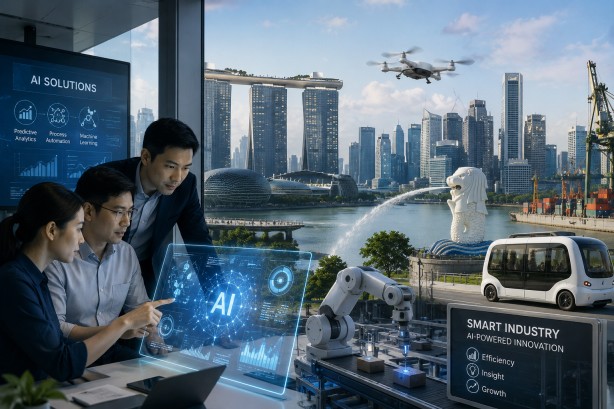
Singapore is looking to harness the transformative power of artificial intelligence (AI) within its advanced manufacturing, logistics, healthcare, and connectivity sectors, aiming to drive economic growth beyond these areas. Together, these industries represent over 40% of the nation’s gross domestic product, and they form the cornerstone of the government’s AI strategy as outlined in Budget 2026.
Trade and Industry Minister Tan See Leng emphasized the potential for AI-driven changes to open up new opportunities not only within these sectors but also for related industries and the broader economy. However, he noted that realizing these benefits hinges on companies’ ability to effectively redesign workflows and seamlessly integrate AI into their operations.
In order to support this AI-led innovation, Singapore must continue to bolster its talent pool, financial resources, and expertise, particularly given the challenges posed by its relatively small population size. This effort is crucial for sustaining the nation’s competitive edge in the global market.
Meanwhile, Cambodian Minister of Industry, Science, Technology and Innovation Hem Vanndy acknowledged the dual nature of AI as both an opportunity and a challenge for Cambodia as it progresses through its digital transformation journey. He underscored the need for businesses and workers to acquire the skills necessary to leverage new technologies and boost productivity.
Both ministers concurred that maintaining an open stance, fostering workforce development, and embracing technological advances are vital for navigating the complexities of geopolitical tensions, trade barriers, and evolving global supply chains.