
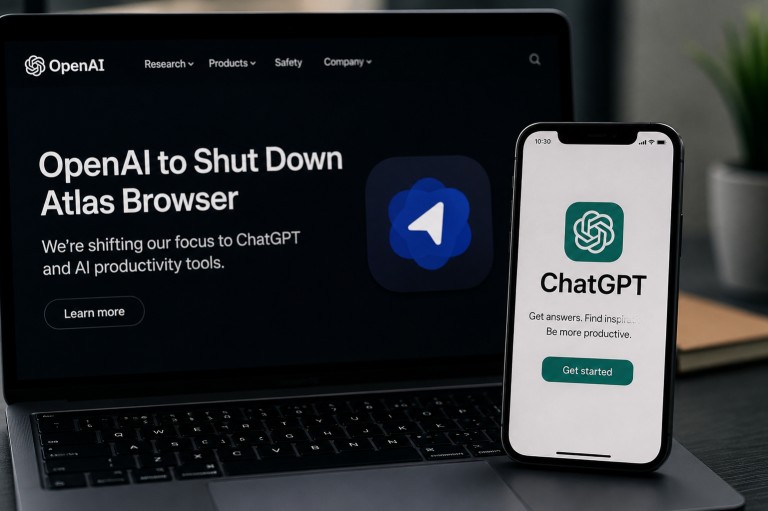
OpenAI recently announced plans to cease operations of its AI-powered web browser, Atlas, by August 9. The company intends to shift its focus towards incorporating Atlas’ key browsing and automation features into its ChatGPT application and other AI productivity tools. This strategic move marks a significant development in OpenAI’s approach to AI-assisted technology.
The lessons learned from Atlas have been pivotal in shaping OpenAI’s vision for AI-driven browsing solutions. As a result, the company is integrating many of these capabilities into the ChatGPT app. Additionally, OpenAI has launched a ChatGPT extension for Google Chrome, designed to analyze webpage content, create summaries, offer contextual information, and facilitate extended automated tasks.
Despite these advancements, OpenAI has clarified that these new tools are not intended as direct substitutes for Atlas. Instead, the focus is on enhancing workplace productivity and developing AI agents, rather than maintaining a standalone browser. This shift reflects OpenAI’s broader strategic objective of embedding its AI features within popular applications, thereby competing with established platforms.
This decision comes at a time when Google continues to lead the browser market with Chrome. Over time, Chrome has enhanced its built-in AI capabilities through features like Gemini integration, AI-assisted browsing, and AI-powered search functionalities. These advancements have solidified Chrome’s dominance, eliminating the need for users to transition to a separate AI browser.
OpenAI’s move underscores its commitment to prioritizing its core AI products and services, while strategically embedding AI capabilities into mainstream platforms. This approach allows OpenAI to compete effectively in the tech landscape, leveraging existing popular applications rather than offering a standalone AI browser solution.