
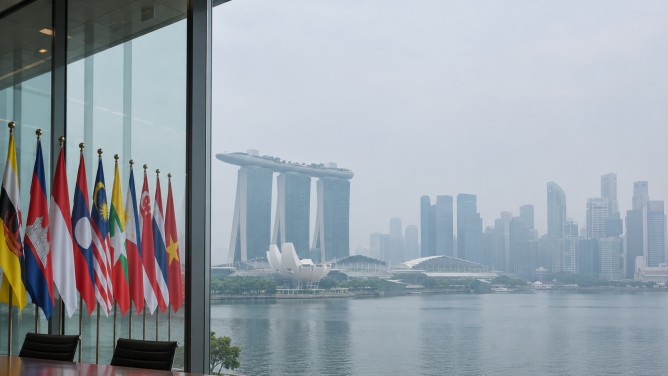
Singapore is set to spearhead a regional initiative to combat transboundary haze pollution by establishing a coordination centre during its 2027 ASEAN chairmanship. Announced by Minister for Sustainability and the Environment Grace Fu, this move aims to enhance cooperation among ASEAN member states in addressing the persistent issue of haze caused by forest fires and land burning.
The proposed ASEAN Coordinating Centre for Transboundary Haze Pollution Control will be based in Indonesia and requires ratification from at least six ASEAN countries. Singapore intends to complete its ratification shortly, urging other nations to do the same. Vietnam has already submitted approval for the centre’s establishment, expected in mid-2026. The centre will focus on exchanging firefighting technology and resources and coordinating emergency assistance during major fire incidents.
This initiative follows a significant haze event in September and October 2026, when Indonesia’s forest and plantation fires resulted in 18 consecutive days of unhealthy air quality in Singapore. During this period, the Pollutant Standards Index in western Singapore reached a concerning level of 230. Although Singapore offered assistance, Indonesia opted to handle the situation independently, a decision Grace Fu acknowledged while highlighting the need for stronger regional collaboration to prevent future occurrences.
In addition to the coordination centre, Singapore is pushing for improved sustainable land and peatland management and the strengthening of agricultural burning guidelines across the region. The government is also taking legal action against businesses implicated in contributing to transboundary haze, issuing notices to 10 companies in both Singapore and Indonesia under the Transboundary Haze Pollution Act.
These efforts are part of a broader strategy to tighten haze-related legislation and enhance accountability for illegal land and forest burning. By fostering a cooperative regional approach, Singapore aims to mitigate the environmental and health impacts of haze pollution in Southeast Asia.