
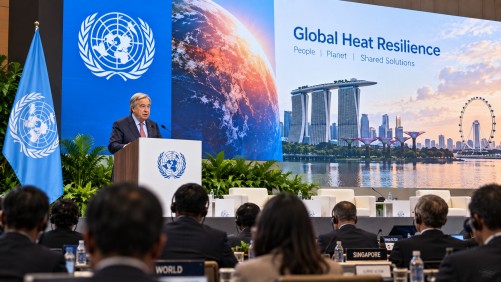
Communities worldwide could soon be better equipped to handle the escalating threat of extreme heat, thanks to a new initiative from the United Nations. Announced during a forum in Singapore, the UN’s Global Heat Resilience Roadmap aims to protect vital sectors such as water, food supplies, schools, hospitals, and energy infrastructure from the damaging effects of rising temperatures.
The roadmap, discussed by representatives from over 60 countries, sets forth strategies to bolster resilience and mitigate emissions from cooling systems. As temperatures rise, the need for air-conditioning has become a significant concern, with cooling currently accounting for about 20% of global electricity use. This demand is expected to more than triple by 2050, highlighting the urgency for more sustainable solutions.
Key components of the strategy include enhancing building ventilation, increasing urban tree cover, creating shaded public spaces, and promoting energy-efficient cooling systems. These measures aim to lessen the environmental impact while ensuring communities remain safe during heatwaves.
UN officials emphasize the necessity for countries to develop robust policies, financial mechanisms, and emergency plans to tackle extreme heat. The roadmap also proposes systems to monitor progress and evaluate the success of national measures in enhancing heat resilience.
Singapore is taking proactive steps by establishing a Heat Resilience Policy Office to oversee heat-management efforts. The city-state plans to open over 300 cooling centers during heatwaves and has already implemented energy-efficiency standards for air conditioners, which have led to notable improvements in cooling efficiency.
The Global Heat Resilience Roadmap will build on existing national plans, allowing participating countries several years to adapt and implement strategies tailored to their local conditions. This initiative marks a significant step toward creating a more sustainable and heat-resilient global community.